Friday, 20 June 2014

I’ll scratch your back..and guess what? You don’t have to scratch mine

“Animals have genes for altruism, and those genes have been selected in the evolution of many creatures because of the advantage they confer for the continuing survival of the species.”  Lewis Thomas


I had not previously been to a ‘coffee tasting’ so was interested to go along when a friend invited me to ‘3FC’ in Grand Canal Street in Dublin to taste the coffees. Fergal’s wife, Siobhán is about to open her third bistro, restaurant, foodstore and Siobhán had given Fergal the task of choosing the coffees for the new Clontarf bistro.

Fergal is Irish (what else!) and as such is bubbling with knowledge, ideas and opinions; some brilliant and some whacky. He is also a lawyer and for a time headed ‘Legal’ in one of the big banks. Between sips of coffee Fergal opined that the misery inflicted on the Irish people during the global financial crisis was a product of stupid government, greedy business and complicit lawyers. Only the teaching and healthcare sectors stood apart and above all that incompetence and skulduggery; all those dreadful sins of omission and commission.

It is certainly true that in public surveys politicians and lawyers (and, since the GFC, bankers!) are consistently listed last on qualities like honesty and integrity and teachers and doctors are consistently listed first. Why is this so? After all, in the case of clinicians, salaries are generally high and physicians lifestyles envied by many. People in other walks of life who make a lot of money are also envied but not so universally admired and respected as are doctors. Much of it has to do with the public perception of why people enter the medical profession. And this perception is that they do so not for material benefit but for altruistic reasons. Is the perception the reality?

The answer that I am going to offer to this question is an answer I always criticise as a ‘cop out’ when others give it in other circumstances – but it is the right answer in this case – and that is…. ‘Yes and No’.

The literature on this suggests that one of the motivating factors is material gain.

But, hang on, material gain? On average, in recent times, medicos salaries have dropped on average by 7% while there has been a rise of 7% across other professions – a net loss to the docs of 14%. And as Erich H. Loewy 1 , points out, in the former Soviet Union and even today in the newly independent former Russian states, the demand for places in medical schools was astronomical despite the prospect of a meagre salary on graduation.

Loewy goes on to cite examples of the enormous amount of selfless pro-bono work undertaken across the healthcare profession when work is done for no material benefit and often in the most inhospitable of 
Interplast Australia
conditions. I can cite many examples of this too. The Pacific Islands Project of the Royal Australasian College of Surgeons saw teams comprised of surgeons, internists, nurses, anaesthetists and technicians spending time in the most trying of settings delivering life saving and life enhancing medical care without any financial return while still bearing the costs of their practices at home, usually from their savings. Similarly, the training, mentoring, advising and hand holding of the next generation of doctors by the current generation is done for love, not money. I am reminded of a leading Neurosurgeon, who was senior examiner for the College of Surgeons, being reported to the local council for disturbing the amenity of the neighbourhood in which he lived because he was in the habit of attaching a floodlight to the front of his lawnmower and mowing his lawn at 5am. It so happened that this always coincided with the weekends on which he was officiating at the surgical exams where each day started at 7am and finished at 11 pm.  No money changed hands for this.


I like Lowey’s story of a cardiac surgeon who was so busy with his pro-bono work that he could only enjoy his hobby of car restoration vicariously; that’s right, he hired someone to restore his cars for him.

I know there are healthcare workers whose prime motivation in plying their trade is for the material rewards, I know this because I have worked with such people. But I can count them on the fingers of one hand and they are soon forgotten because they are not the healthcare workers that make a difference.

So, to all you altruists out there, well done and thank you, it is you who are shaping the future.

So, back to where all this started, a discussion over coffee. Fergal and I liked the Ethiopian coffee the best so the Bistro in *Clontarf will be the place for you to go for great coffee when next in Dublin.

Footnote* This year celebrates the 1000 anniversary of the Battle of Clontarf.

“Battle of Clontarf” 
oil on canvas painting by Hugh Frazer, 1826

The Battle of Clontarf (Irish: Cath Chluain Tarbh) was a battle that took place on 23 April 1014 at Clontarf, near Dublin, on the east coast of Ireland. It pitted the forces of Brian Boru, High King of Ireland, against a Viking-Irish alliance comprising the forces of Sigtrygg Silkbeard, King of Dublin, Máel Mórda mac Murchada, King of Leinster, and a Viking contingent led by Sigurd of Orkney and Brodir of Mann. 

It lasted from sunrise to sunset, and ended in a rout of the Viking and Leinster forces. It is estimated that between 7,000 and 10,000 men were killed. Although Brian's forces were victorious, Brian himself was killed, as were his son Murchad and his grandson Toirdelbach. Leinster King Máel Mórda and Viking leaders Sigurd and Brodir were also slain. After the battle, the Vikings of Dublin were reduced to a secondary power. Brian's family was temporarily eclipsed, and there was no undisputed High King of Ireland until the late 12th century.

The battle was an important event in Irish history and is recorded in both Irish and Norse chronicles. In Ireland, the battle came to be seen as an event that freed the Irish from foreign domination, and Brian was hailed as a national hero. This view was especially popular during English and British rule in Ireland.
(With thanks to Wikipedia) 

1 Healthcare Systems and Motivation,  Erich H. Loewy, MD, FACP   Medscape: Thursday, June 19, 2014


Peter Carter
Chief Executive Officer
ISQua
June 2014

Thursday, 1 May 2014

CHAUNCEY GARDNER

‘A journey is not so much about the destination as it is about the company you keep along the way'   Anon

If I support this notion you will no doubt remind me that in an earlier BLOG I argued that one must know where one is going when setting out on a journey ‘…. lest part way through your journey you find you are travelling in the wrong direction or, worse still, you complete your journey only to find you have arrived at the wrong place.'

Nevertheless, whether you know where you are going or not, the journey is better undertaken in good company.

We are taught, and in turn we teach others, that planning is paramount, that it is everything, that nothing should be left to chance. But is it?

Jack Welch, one of the better known CEOs, has his doubts:

‘Willingness to change is strength, even if it means plunging part of the company into total confusion for a while’

And if you are a Rolling Stones fan you will not be surprised to learn that Mick Jagger would not see planning as essential to success, and successful he has been:

‘Anarchy is the only slight glimmer of hope’

And why is it that surgeons still insist that surgery is both a science and an art?

Where am I going with this? I am arguing that whatever one’s endeavours one must not try to eliminate any possibility of the unexpected completely. Referring again to an earlier BLOG, the one where the composition of Jeffrey Smart’s painting was decided by a wood shaving falling onto and adhering to the canvas; leave room for the intervention of chance; it is a power beyond those one can muster oneself.

You may well ask are these views not an anathema to one who manages an organization that strives to enhance quality? But I am not arguing against seeking to eliminate errors, improve systems, increase knowledge and skills and enhance quality, rather I am saying be aware that on your professional journey your companions from time to time might be the unexpected, the unplanned, and when they join you on your journey, embrace them if they are good and you can learn from them.

The best example in healthcare of the benefits of the unexpected for me is the discovery of Penicillin. Fleming puts the date of his discovery as September 28, 1928. He considered it to be a fortuitous accident: in his laboratory Fleming ‘….noticed a Petri dish containing Staphylococcus plate culture he mistakenly left open, was contaminated by blue-green mould, which formed a visible growth. There was a halo of inhibited bacterial growth around the mould. Fleming concluded the mould released a substance that repressed the growth and lysing the bacteria. He grew a pure culture and discovered it was a Penicillium mould, now known to be Penicillium notatum.’ (1)

Why the BLOG title ‘Chauncey Gardner’? The answer is a movie starring Peter Sellers called Being There. If you haven’t seen it I recommend it to you. It makes my point cleverly.

Peter Carter

Chief Executive Officer

ISQua

May 2014


1.     1. Wikipedia

Wednesday, 19 March 2014

A UNIVERSAL PATIENTS’ BILL OF RIGHTS?


The Magna Carta deals with ideals of democracy, limitation of power, equality and freedom under law.

Lord Denning described it as "the greatest constitutional document of all times – the foundation of the freedom of the individual against the arbitrary authority of the despot". Danny Danziger & John Gillingham, "1215: The Year of Magna Carta"(2004 paperback edition) p278


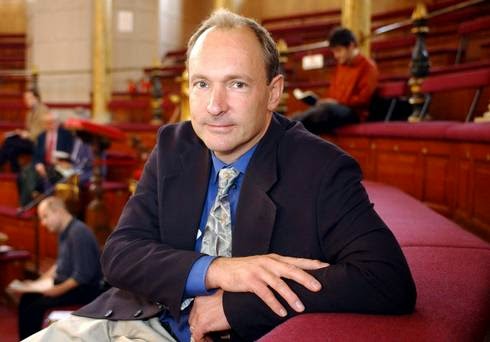
Tim Berners-Lee is the creator of the worldwide web. In celebration of the 25 anniversary of his creation this month, Berners-Lee called for the drawing up of a Magna Carta for the www.

The Magna Carta plan is in effect a ‘digital bill of rights’ – a statement of principles, B-L hopes will be supported by public institutions, government officials and corporations.

"Unless we have an open, neutral internet we can rely on without worrying about what's happening at the back door, we can't have open government, good democracy, good healthcare, connected communities and diversity of culture. It's not naive to think we can have that, but it is naive to think we can just sit back and get it."

So, a call to action!

Tim Berners-Lee

Bills of Rights have been popular ever since 1215 and the Magna Carta.

The best know Bill is the American Bill of Rights. Written in 1789, this is in fact made up of the first 10 amendments to the American Constitution. These amendments guarantee personal freedoms, limit the Federal Government’s powers and reserve some powers to the States and the public. In recent times, the most controversial amongst these freedoms is the freedom to bear arms. Originally this was designed to assuage fears by the States of a Federal takeover by forcer, but in recent times it has been used to justify individuals’ ownership of guns.

There are plenty of other Bills of Rights including Animals Bills of Rights and even a PhD students’ Bill of Rights, the latter talking of a right to a recognised expert and to an ethical role model.

It is however on Patients’ Bills of rights I wish to focus in this BLOG.

One of the fundamental problems with Bills of Rights is what to include and what to leave out. That is the reason so many countries, organisations and activities have failed to achieve what one would consider to be an obvious and good thing.

For example, the US Senate's 2001 attempt at a Bill had just the following eight broad rights for patients with health care plans:
·         have their medical decisions made by a doctor;
·         see a medical specialist;
·         go to the closest emergency room;
·         designate a pediatrician as a primary care doctor for their children;
·         keep the same doctor throughout their medical treatment;
·         obtain the prescription drugs their doctor prescribes;
·         access a fair and independent appeals process if care is denied; and
·         hold their health plan accountable for harm done.

The Bill was passed by the US Senate, amended the House of Representatives and failed when it returned to the Senate.
On the other hand Arizona State’s Scottsdale Healthcare has no fewer than 28 rights (and 16 responsibilities, the argument being that with rights come responsibilities).

The overarching patient Bill of Rights is in fact an oath taken by doctors: the Hippocratic Oath. In this the expectations of how the physician should practise can reasonably be taken to be the expectations of the patient of his or her treatment.

A 12th-century Byzantine manuscript of the Oath

The English translation of the original is:
To consider dear to me, as my parents, him who taught me this art; to live in common with him and, if necessary, to share my goods with him; To look upon his children as my own brothers, to teach them this art; and that by my teaching, I will impart a knowledge of this art to my own sons, and to my teacher's sons, and to disciples bound by an indenture and oath according to the medical laws, and no others.
I will prescribe regimens for the good of my patients according to my ability and my judgment and never harm to anyone.
I will give no deadly medicine to any one if asked, nor suggest any such counsel; and similarly I will not give a woman a pessary to cause an abortion.
But I will preserve the purity of my life and my arts.
I will not cut for stone, even for patients in whom the disease is manifest; I will leave this operation to be performed by practitioners, specialists in this art.
In every house where I come I will enter only for the good of my patients, keeping myself far from all intentional ill-doing and all seduction and especially from the pleasures of love with women or men, be they free or slaves.
All that may come to my knowledge in the exercise of my profession or in daily commerce with men, which ought not to be spread abroad, I will keep secret and will never reveal.
If I keep this oath faithfully, may I enjoy my life and practice my art, respected by all humanity and in all times; but if I swerve from it or violate it, may the reverse be my life.

This has been modified many times over the centuries but most of the sentiments expressed in the original remain.

There has since 1948 been a Universal Declaration of Human Rights. It comprises 30 Articles based in general around:
-- Human rights are Universal, Indivisible, Interconnected and interrelated
-- With equality and without discrimination for all women and men, youth and children
-- Democracy must be a delivery system of human rights
--All must know, own, organize, plan and act guided by human rights as a way of life

The existence of such a Declaration, while by no means guaranteeing rights for all citizens of the world, allows its invocation in cases where such rights are threatened or subjugated.

Is there then a place for a Universal Bill of Rights or Declaration of Rights for patients as a successor to the Hippocratic Oath which is probably not enough to cover the complexities of a 21st century society and 21st century healthcare?

Yes, if the challenge of knowing what to include and what to leave out could be met and if a clear idea of in what circumstances and in what way it could be brought to bear could be decided.

A job for the ISQua Innovation and Systems Change Working Group perhaps?


Peter Carter
Chief Executive Officer
ISQua
March 2014

Friday, 7 February 2014

THE SUM OF THE PARTS………….

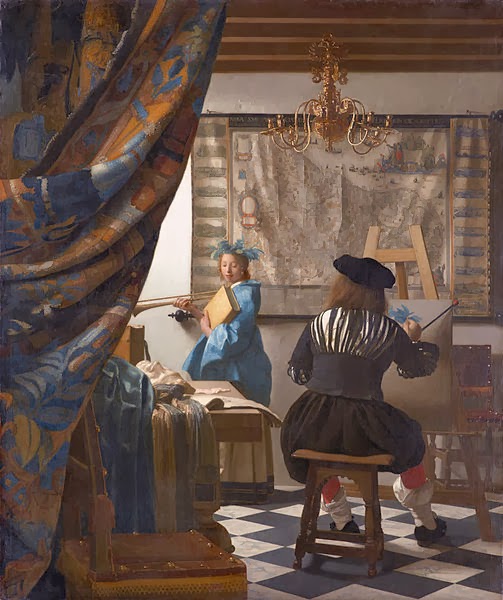
The very best artistic and literary works have at their heart an idea and composition.
We can all write and draw; some of us can even write and draw very well. But without a compelling idea and without a highly developed sense of composition (ie: how all the bits are fitted together to make a whole) we will not join the Vermeers or Smarts or the Rushdies of this world and achieve greatness.

                                                                                                                 The Art of Painting by Jan Vermeer

Van Gogh wrote of the Dutch masters…

And there is the story of Jeffrey Smart struggling with the composition for a work he was painting only to find his struggle over when a wood shaving from refurbishments going on in his house floated down and landed on the unfinished work adhering to the wet oil paint on the canvas. He turned the wood shaving into a seagull and that was the piece needed to make the composition complete. It became one of his best known works.

The Bus Stop, Jeffery Smart
And what is the composition of medicine? Surely not what is represented in this poster.
The thing that separates writers who produce one good work from those who produce good works over and over again is that the former compose well by accident whereas the consistently good writer knows how to do it over and over again. And so it is with music.


Writing in 2005, Litaker et al (1) touch on what I consider might be something like composition in healthcare:

“Although health is influenced by an individual’s characteristics and choices, accumulating evidence suggests that contextual attributes may influence a variety of health outcomes.”

So the way in which we assemble all the bits and pieces around the patient may influence outcomes.

In art, ‘The artist determines what the center of interest of the art work will be, and composes the elements accordingly. The gaze of the viewer will then tend to linger over these points of interest, elements are arranged with consideration of several factors …… into a harmonious whole which works together to produce the desired statement – a phenomenon commonly referred to as unity.’

So too does the clinician having recognised the patient as the ‘…center of interest…compose the elements accordingly…’. She or he will take into consideration several factors and work them into a harmonious whole which will then lead to diagnosis and a treatment regime.

If we then move from the individual, the patient, to the collective of patients and think about composition in the healthcare system, the analogy still stands up. Writing in the BMJ with some foresight in 1962, former Chief Medical Officer of the UK Ministry of Health Sir John Charles said (2):

‘It is my submission that in the operations of our National Health Service, and those other services concerned with the public health, whether administered by the Ministry of Health itself or by other Departments of Government, we have a series of undertakings, symbiotic at least, if not so completely co-ordinated as they might be, which contribute to the social context of our health.’

He went on……..

‘(a) The treatment of the patient as the “whole man" and not merely as the carrier and example of a pathological manifestation.

(b) The recognition of him as a member of a family-and the consideration of the effects of his illness upon the family.

 (c) The evocation of the communal machinery, whether operating through the local health department or otherwise, which will assist him and the family in whatever way help or guidance may be required.

(d) The relevance of occupation to the patient's illness.

(e) The place of psychological factors -- the stresses, strains, and suffocating frustrations of modern life and modes of living-in the causation and continuance of the patient’s condition.’

Halfon et al writing in the Healthcare Quarterly in 2010 (3) also talks about the importance of considering all the bits and pieces and (more importantly) how they need to be skilfully put together when faced with healthcare challenges across populations:

“There is no simple biological reason why the risk of pregnancy-related death in Sweden is one in 17,400 while it is one in eight in Afghanistan; why the life expectancy at birth of men in the Calton region of Glasgow is 54 years, 28 years lower than that of men in Lenzie, just a few kilometres away.”
These striking disparities “reflect avoidable and unnecessary suffering,” a California-based team of healthcare researchers say. Social environments clearly matter for health. Yet these critical factors – the social determinants of health – have been “conspicuously absent” from the recent US healthcare debates.
But the question remains: if health is individual and biological, how do social determinants get “into the body”? How, exactly, does my social context affect my health?’’
The University Of Michigan Department Of Health certainly gives a nod to the importance of composition in seeking to improve healthcare quality. Its course in

Social, Cultural and Community Context of Healthcare talks about how

‘Residents will learn how to recognize the diverse factors that influence the health of individuals in the community. They will be able to identify social, cultural, familial, psychological, economic, environmental, legal, political and spiritual factors that impact health care and health care delivery. They will respond to the social context created by these factors by planning and advocating the appropriate course of action at both the individual and community level. They will develop zero tolerance for stereotypic language, racism, sexism, ageism, and aspersions to individuals or groups based on ethnic, religious and sexual preference or lifestyle choices. They will avoid identifying individuals by the name of their disease. They will understand all the reasons behind non-adherence and methods to mitigate it. They will learn the benefits of being an advocate for better health for patients in the community and understand the resources available in the community to provide ethnicity- and gender-sensitive and culturally-competent healthcare’.

So, in short, it is important to understand how best to assemble all the elements of healthcare both for the individual and for the community to achieve the most pleasing results.

‘A work of art is said to be aesthetically pleasing to the eye if the elements within the work are arranged in a balanced compositional way. However, there are artists such as Salvador Dalí whose sole aim is to disrupt traditional composition and challenge the viewer to rethink balance and design elements within art works’.(4)
Run your eye back up to the Vermeer with which I started this BLOG, then down to the Dali below and I will leave you to decide what achieves the most pleasing result.

                                                                         Still Life Moving Fast, Salvador Dali: 

Peter Carter
Chief Executive Officer
ISQua
February 2014


(1)     Litaker, David MD, PhD*†; Koroukian, Siran M. PhD†; Love, Thomas E. PhD†‡
         Medical Care June 2005 – Volume 43 – Issue 6 – pp531-540
(2)     Sir John Charles: BRITISH MEDICAL JOURNAL, LONDON SATURDAY DECEMBER 22 1962
(3)     Halfon, Neal, Kandyce Larson, and Shirley Russ. 2010. “Why social determinants?”   Healthcare Quarterly 14 (Special issue, October): 9-20.
(4)     Wikipedia